RESIDENTIAL APARTMENT
Decorative Elements and Their Role in Shaping Architectural Lighting
Lighting Concept | Residential Apartment
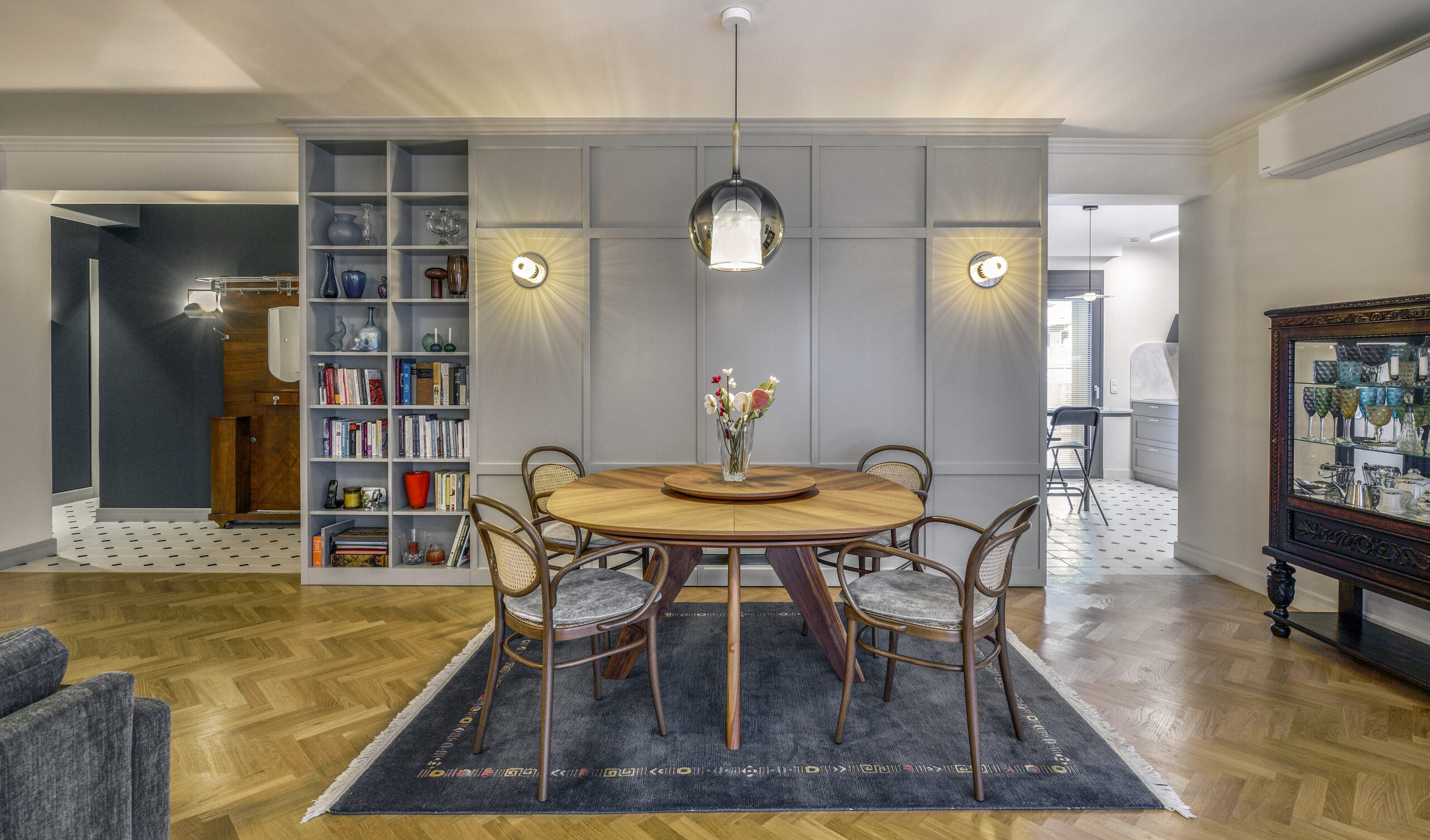
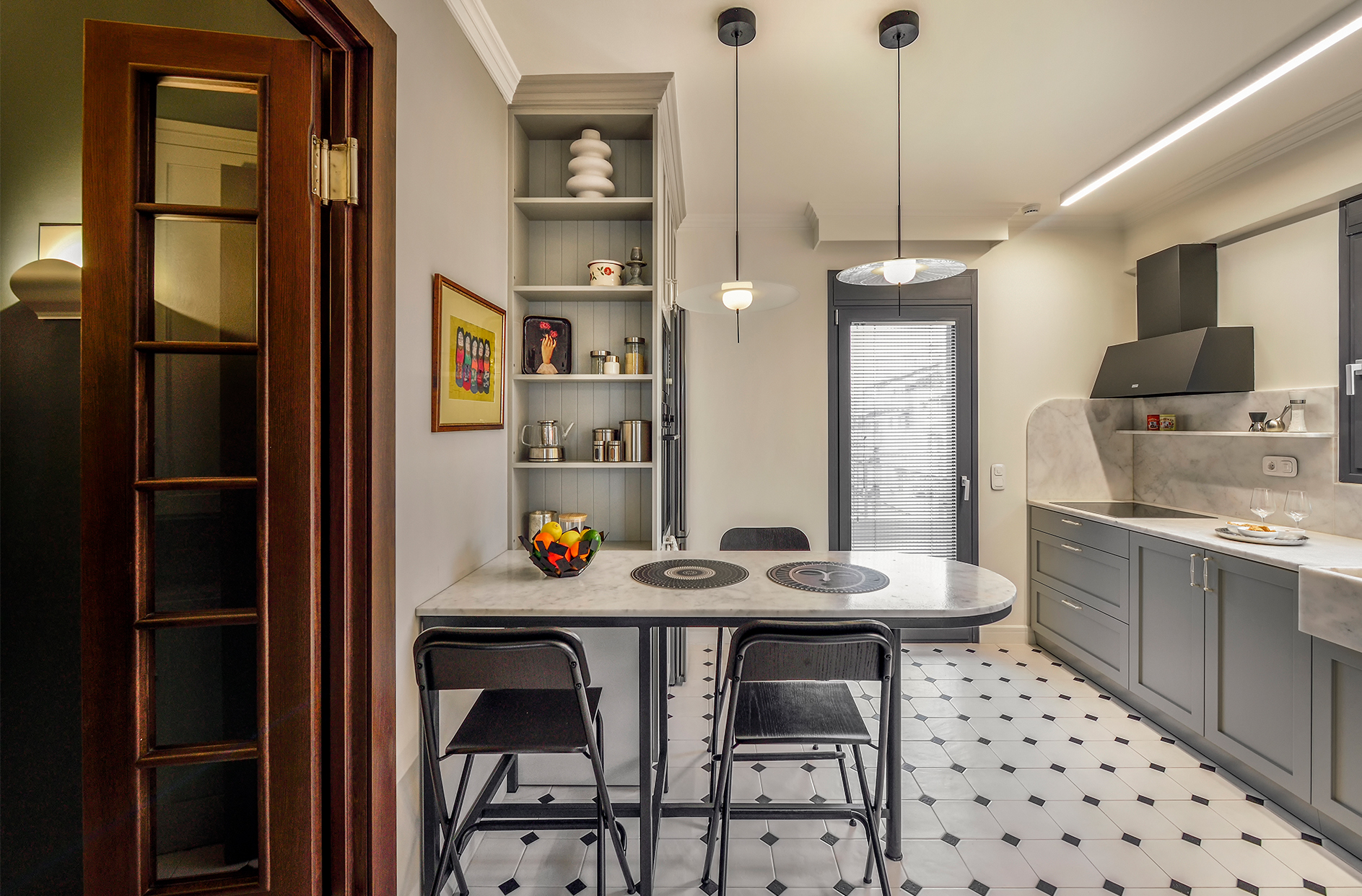
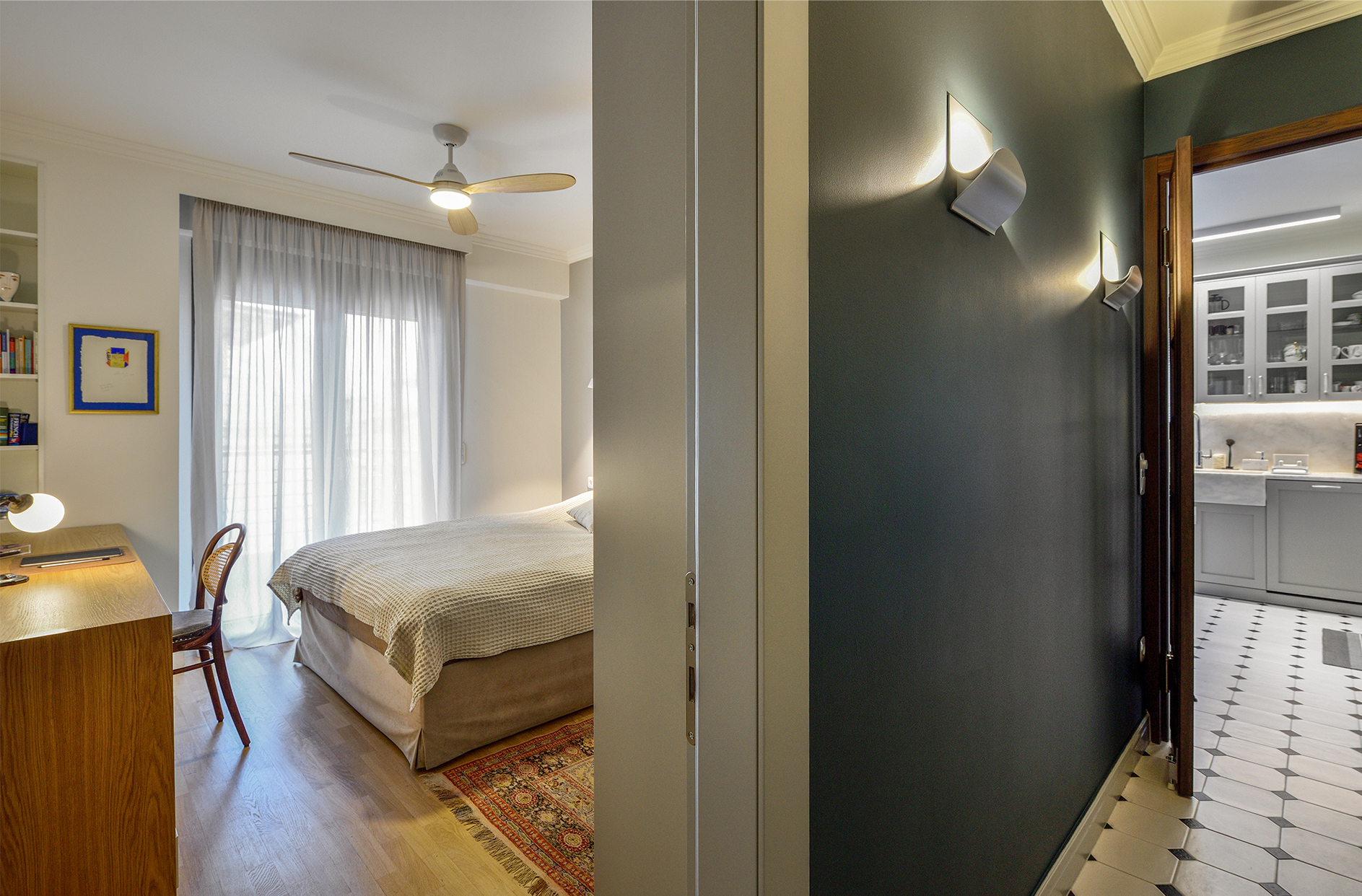
This lighting concept explores how decorative lighting can be used as a tool for spatial organization and hierarchy within a compact open-plan apartment.Rather than aiming for uniform illumination, the design is based on controlled light zones that define use, movement, and atmosphere.
The dining area acts as the spatial anchor of the layout. A pendant luminaire by Penta, positioned precisely on the axis of the table, functions as the primary focal point. It establishes symmetry, defines the dining zone, and provides functional, focused light without overpowering the space.
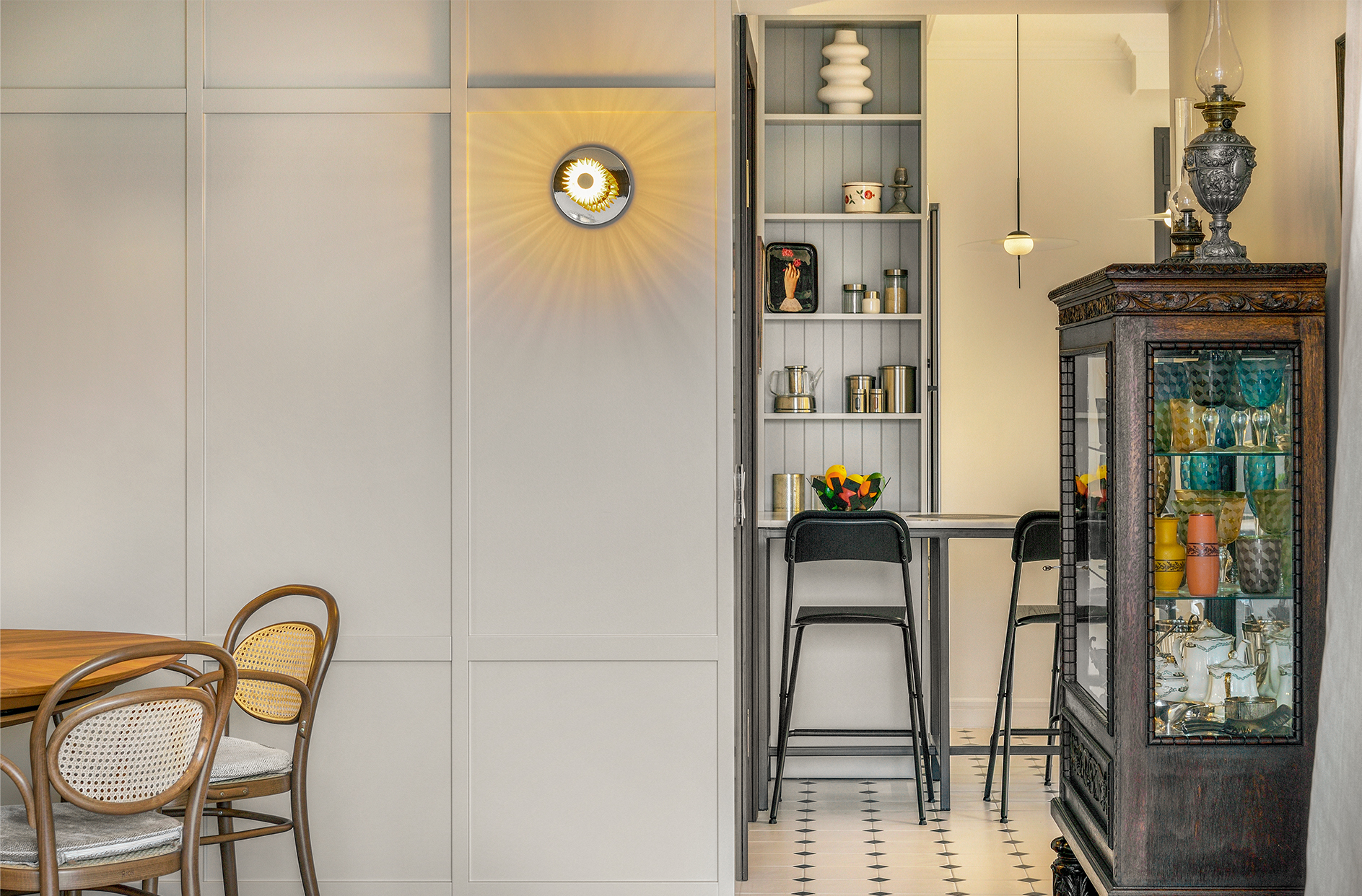
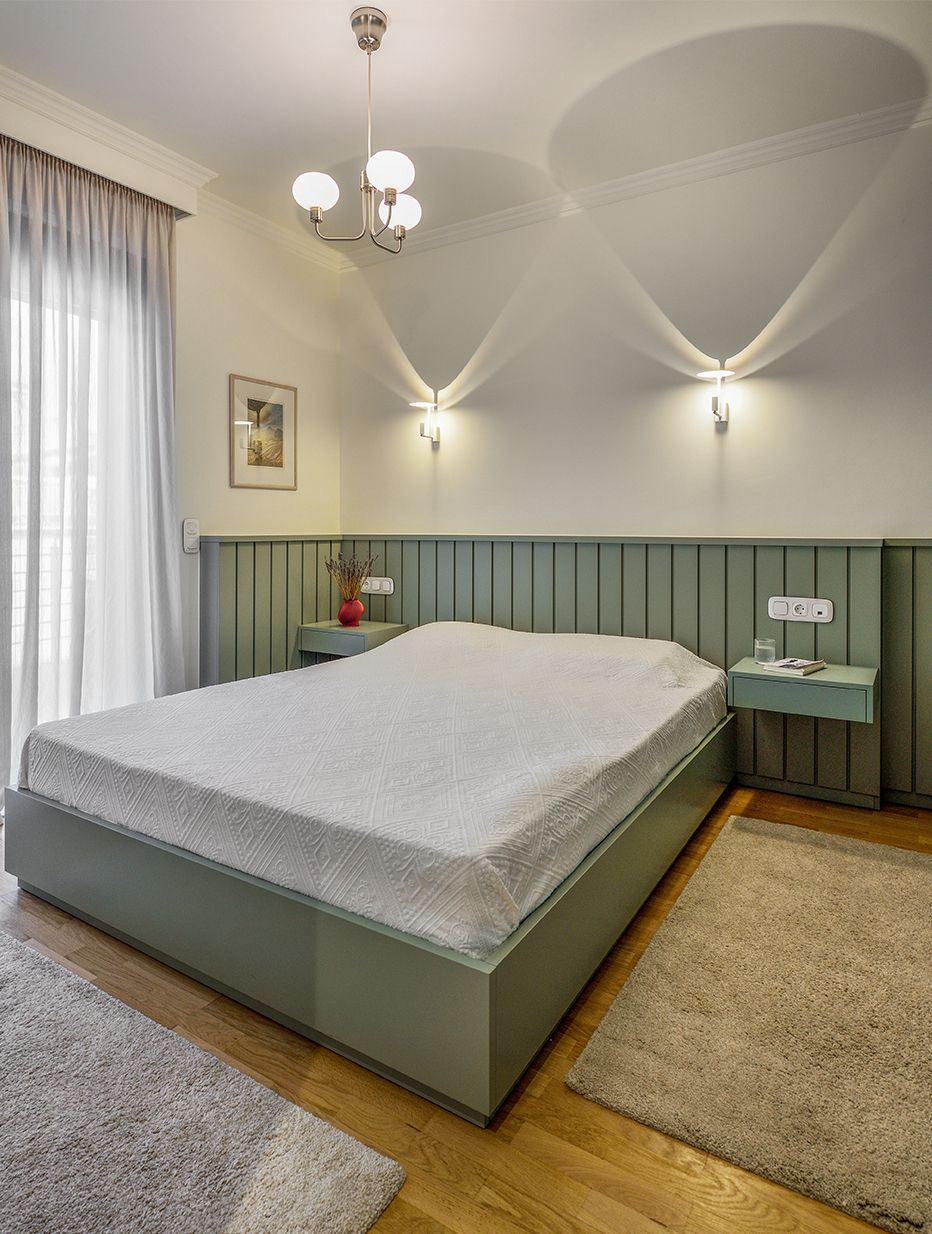
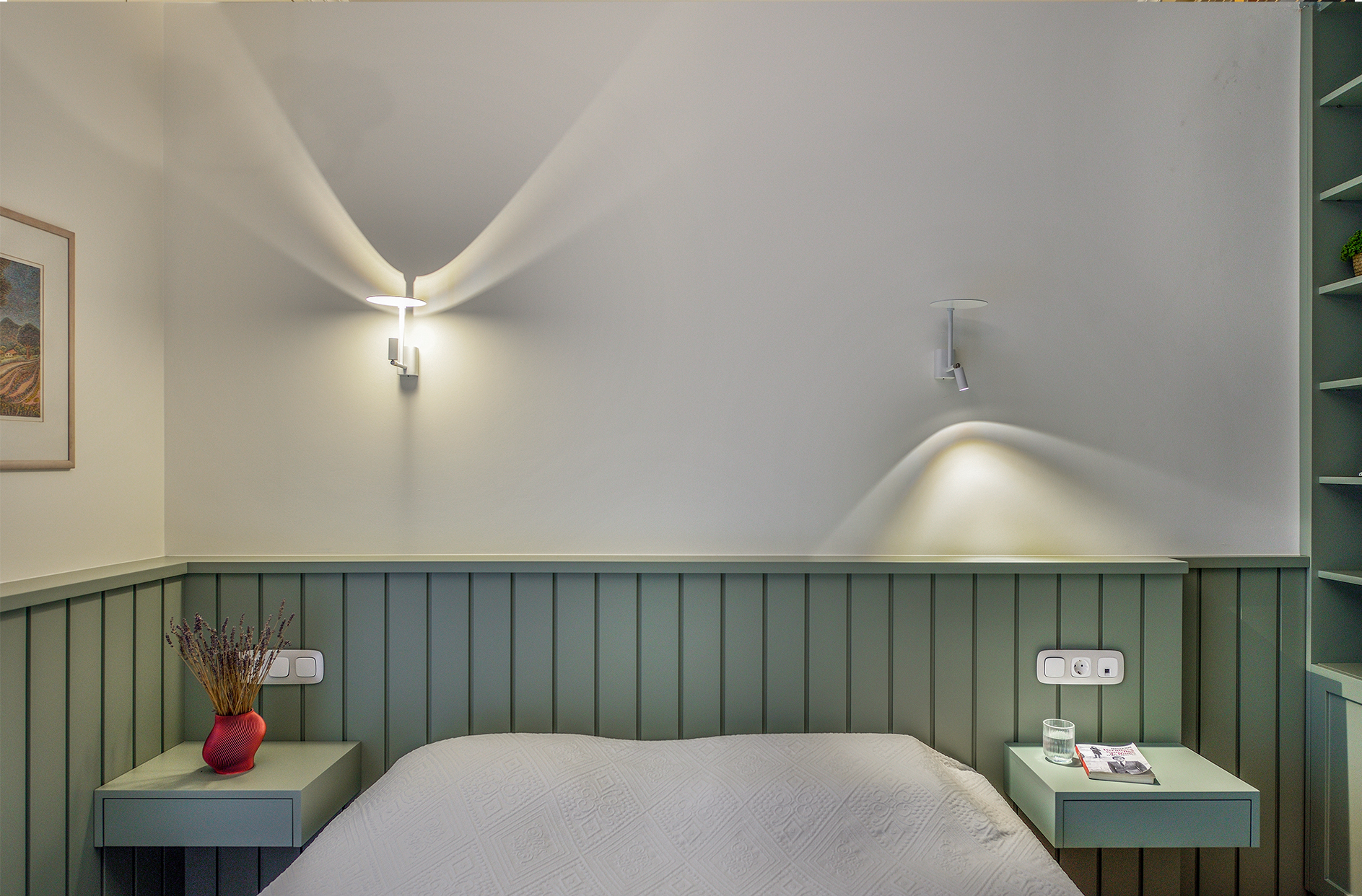
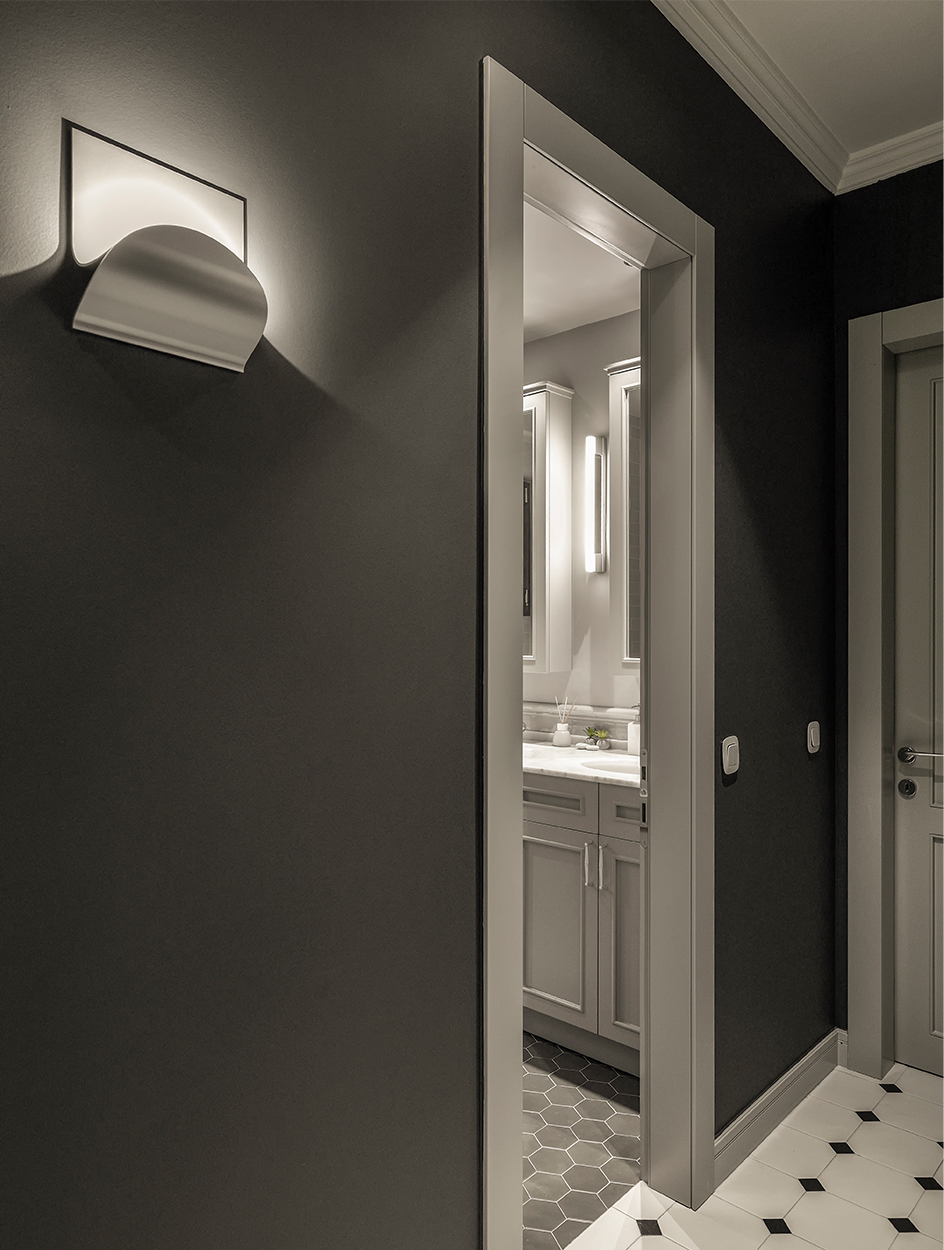
Wall luminaires by DCW éditions and Cini&Nils are arranged symmetrically along the perimeter wall, forming a continuous architectural light composition. Their role is to add depth, articulate the vertical surface, and reinforce the geometry of the space, rather than act as purely decorative elements.
In the living area, lighting remains soft and supportive. General lighting is present but deliberately restrained, allowing furniture, materials, and textures to remain visually dominant and ensuring a smooth transition between zones.
The lighting hierarchy is clearly defined:
– Focal lighting – dining area (Penta)
– Architectural / ambient lighting – perimeter wall (DCW éditions, Cini&Nils)
– Supporting general lighting – living area
The project demonstrates how, through careful selection and positioning of decorative luminaires, lighting can become an integral architectural component, shaping space, perception, and everyday experience.
The challenge:
spatial organization | open plan apartment
RL approach:
focal points | ambient lighting | lighting hierarchy
Team ID
Architect: LIZA TIKTAPANIDOU ARCHITECTURE
Photo Credits: Studio VD
Lighting Design: Reflect Lights
Project